Think about a speaker who can hold your attention without raising their voice or trying too hard. They know when to slow down, when to pause, which word to stress and when a softer tone will make a stronger impact.
That is voice modulation at work.
Most of us naturally change our voices when we’re excited, concerned, amused or serious. The trouble begins when we have to speak in a meeting, give a presentation, address an audience or step in front of a microphone. Suddenly, the voice can become flat, rushed or uncertain.
Voice modulation training helps you understand these habits and develop better control over the way you speak. And it isn’t limited to aspiring voice-over artists. Professionals, students, teachers, entrepreneurs, content creators and anyone who regularly communicates with people can benefit from it.
Voice modulation is the ability to vary your voice according to what you’re saying and how you want the listener to receive it.
It involves several elements working together: pitch, tone, pace, volume, pauses, emphasis and expression.
Take a simple sentence such as:
“I didn’t say he was wrong.”
Put the stress on a different word each time you say it, and the meaning can change considerably.
That’s why communication isn’t only about choosing the right words. How those words are delivered matters just as much.
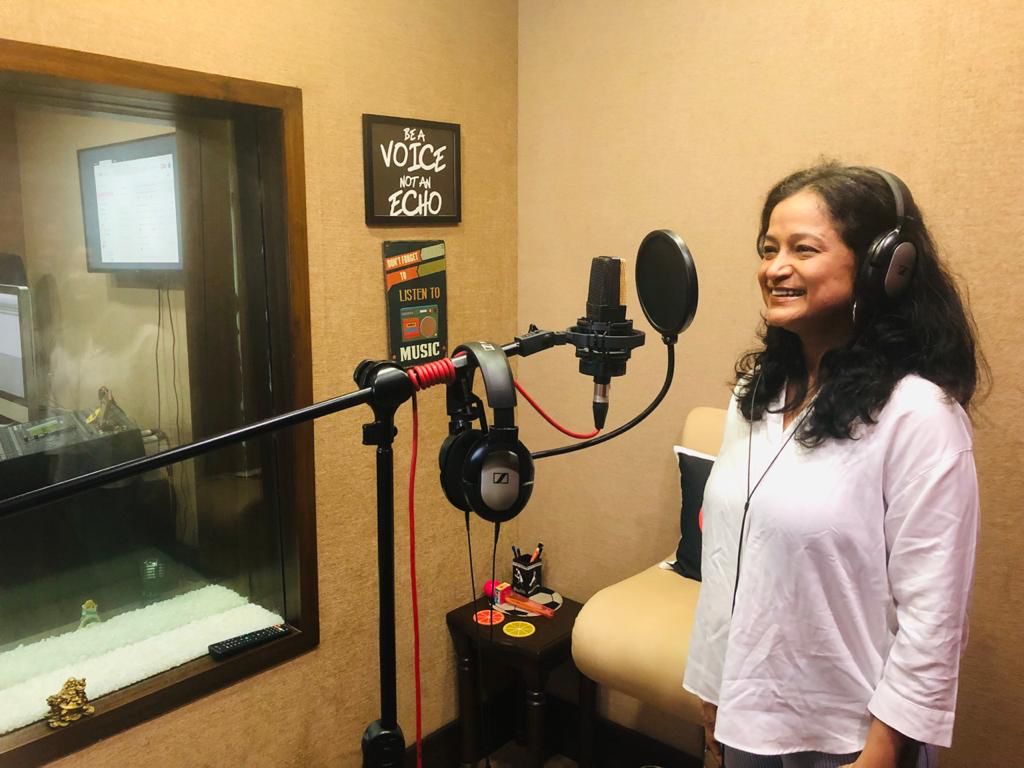
For anyone interested in exploring voice professionally, our voice-over workshops and training programs go deeper into voice acting, dubbing, communication and practical voice coaching.
You may have excellent ideas, but if you race through them or deliver everything in the same tone, your listener has to work harder to stay interested.
A well-modulated voice gives the listener cues.
A pause says, “This next part matters.”
A slower pace can make an important idea easier to absorb.
A change in pitch can communicate excitement or curiosity.
A warmer tone can make a conversation feel more personal.
This becomes particularly important when you’re speaking to an audience, presenting at work, recording content or performing behind a microphone.
If confidence while speaking is something you struggle with, our article on how to speak confidently is a useful companion to this guide.
Pitch is simply how high or low your voice sounds.
Nobody needs to speak like an announcer, and deliberately moving your pitch up and down every few seconds will probably sound forced. The goal is much simpler: avoid getting stuck at one level.
When you’re genuinely interested in what you’re saying, your pitch usually moves naturally. Voice training helps you retain that natural variation even in situations where you’re nervous or concentrating heavily on your words.
This becomes especially important in voice acting and narration, where the voice has to carry much of the emotion. You can see how these skills translate into professional work in our guide to the skills required for a good storytelling narrator.
Words tell people one thing. Tone can tell them something completely different.
Say “That’s interesting” enthusiastically and it sounds encouraging. Say exactly the same words with a flat tone and the listener may wonder whether you’re interested at all.
Good modulation means matching your tone to your intention.
This is particularly useful in voice-over work, where the listener often cannot see facial expressions or body language. The voice has to do more of the storytelling.
For a practical example of why tone matters in commercial content, read Voice Over for Explainer Videos: How the Right Tone Increases Conversion.
Nervous speakers often speed up without realizing it.
Unfortunately, the audience doesn’t know your presentation as well as you do. What feels perfectly understandable to you may be moving too quickly for someone hearing the information for the first time.
Try varying your pace instead.
Move naturally through familiar information, then slow down when you reach an important point. Give the listener a moment to absorb it before continuing.
A change in pace also makes storytelling more interesting. A faster section can create excitement; slowing down can build anticipation or draw attention to an emotional moment.
Many people are uncomfortable with silence. The moment they stop speaking, they feel they need to fill the gap with “um,” “so,” “basically,” or another sentence.
You don’t.
A well-placed pause can be more effective than another ten words.
Try this during your next presentation: make an important statement and wait for a second before continuing.
It may initially feel like a long silence to you. To your audience, it often feels completely natural.
Pauses give listeners time to process information and give you time to breathe, think and regain control of your delivery.
People sometimes associate confidence with speaking loudly. They’re not the same thing.
Good volume control means being clearly audible while having enough range to change intensity when the message calls for it.
An energetic statement may need more volume. A thoughtful or personal observation may become more effective when you bring the volume down slightly.
The important thing is that the change has a reason.
Not every word deserves equal weight.
If everything is emphasized, nothing really stands out.
Before giving a presentation or recording a script, identify the words carrying the central meaning of each sentence. Those are often the words that deserve slightly more vocal emphasis.
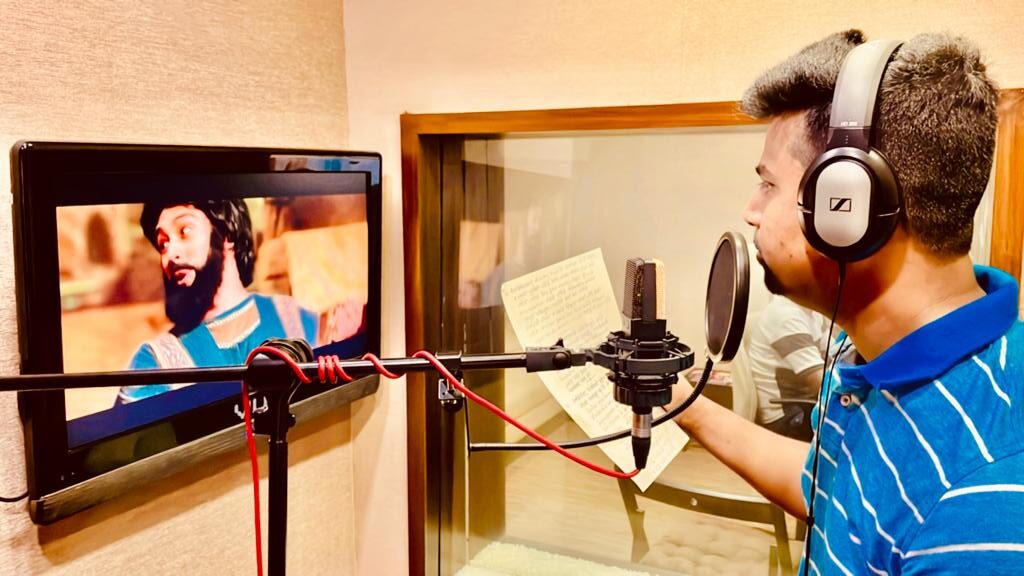
This technique is especially useful for narration, advertising and voice-over assignments. Professional voice-over and dubbing requires an artist to understand not just how to read a script, but how to interpret it.
You don’t need a studio or an elaborate routine to start improving your voice. Ten focused minutes can be more useful than an hour of unfocused practice.
Record one minute of natural speech. Pick a familiar subject and talk about it without preparing. Listen back once. Don’t judge whether you “like” your voice. Instead, notice your pace, pauses, clarity and variation.
Read the same paragraph three ways. First, read it naturally. Then imagine you’re explaining it to a close friend. Finally, imagine you’re presenting it to a room full of people. Notice what changes.
Play with emphasis. Take one sentence and stress a different word every time you repeat it. Listen to how the meaning shifts.
Practice intentional pauses. Mark a few pauses on a printed script and respect them while reading aloud.
Experiment with emotion. Say the same line as though you’re excited, disappointed, curious, confident and concerned. It may feel theatrical initially, but it’s an excellent way to discover your vocal range.
You can also explore the basics of voice resonance to understand another important aspect of how a voice develops its individual character.
Voice modulation isn’t something you use only on stage.
Think about how often your voice affects your professional life: interviews, client calls, presentations, negotiations, sales conversations, team meetings and even everyday discussions with colleagues.
Someone who knows how to slow down, articulate clearly and emphasize an important point can often communicate an idea more effectively than someone simply trying to sound impressive.
For leaders, the skill becomes even more valuable. A calm, controlled delivery can help communicate authority without aggression, while a conversational tone can make feedback and discussions more approachable.
G-Corp Media’s communication and voice training workshops include customized programs for individuals as well as corporate professionals.
For a voice-over artist, modulation isn’t an optional extra. It’s part of the craft.
A commercial may require energy and warmth. An audiobook needs sustained expression without becoming exhausting to listen to. E-learning narration calls for clarity and consistency. A character in a dubbed production may demand an entirely different vocal personality.
The artist has to interpret the script rather than simply read it.
If you’re considering voice-over professionally, you may also want to read our step-by-step guide to hiring a voice-over artist. Looking at the process from the client’s side can help aspiring artists understand what clients actually listen for.
You can also explore G-Corp Media’s professional voice-over services to understand how voice talent is used across commercials, corporate films, e-learning, explainer videos and other formats.
This is worth mentioning because it is an easy trap to fall into.
People hear a presenter, RJ, actor or voice artist they admire and start copying the person’s pitch or speaking style.
That isn’t the goal of voice modulation training.
Your natural voice already has its own character. Training is about discovering what it can do and learning how to use it deliberately.
The same principle applies to storytelling. A story becomes convincing when the speaker understands the message and communicates it naturally rather than putting on a “storytelling voice.” Our article on using storytelling as a tool for better articulation explores this relationship between voice, diction and expression in more detail.
There’s no fixed answer.
Some habits can change quickly once you become aware of them. Others—particularly breathing, articulation, vocal range and confidence—need regular practice.
The key word is regular.
Ten or fifteen minutes of deliberate practice every day is usually more useful than practising intensely once and forgetting about it for the rest of the week.
Record yourself periodically too. Your own recordings give you a surprisingly useful picture of what’s changing.
A good voice isn’t necessarily the deepest, loudest or most polished voice in the room.
It’s the voice that makes people want to keep listening.
Learning voice modulation gives you more choices when you communicate. You can slow down when an idea needs space, add energy when enthusiasm matters, pause when you want something to land and use your tone to communicate what words alone cannot.
And the more naturally you learn to do these things, the less you have to think about them.
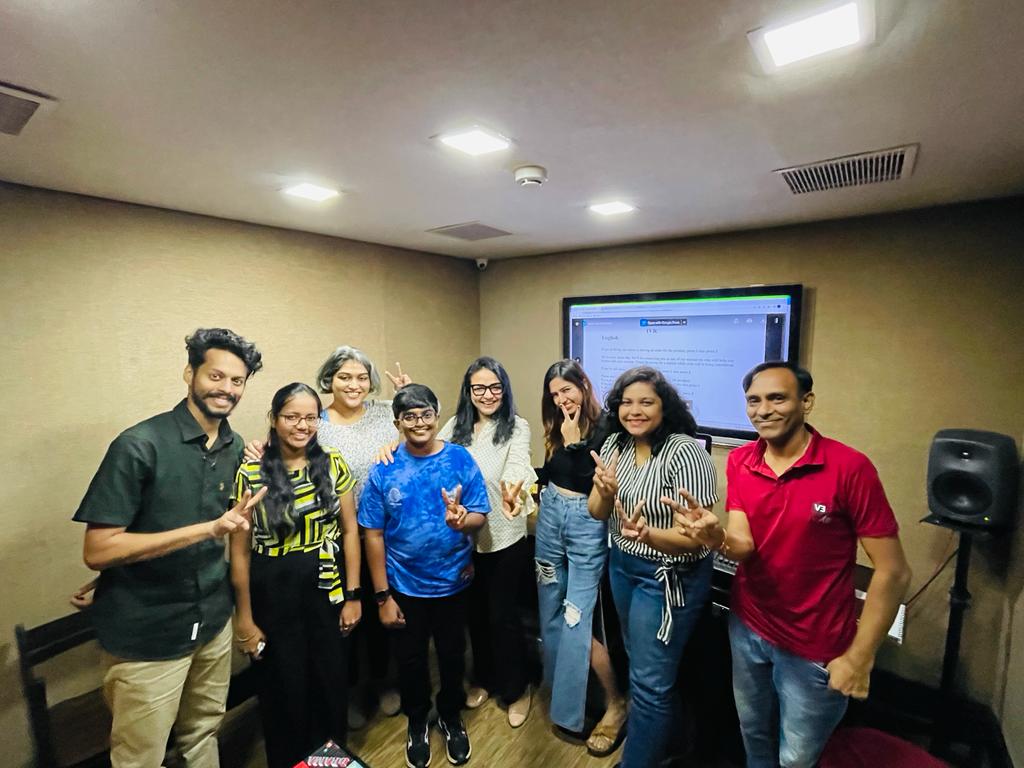
If you’d like structured guidance, G-Corp Media conducts voice-over classes, voice modulation training and communication workshops in Mumbai for aspiring voice professionals, working professionals, corporates and students.
Sometimes, finding your voice isn’t about changing it at all.
It’s about learning how to use it.